Scholars frequently examine how digital spaces reconfigure traditional literacy practices. A central claim from recent scholarship on participatory culture—most notably articulated by Henry Jenkins and expanded in modern digital rhetoric studies—is that modern digital platforms do not merely distribute content; they foster participatory cultures where audiences shift from passive consumers into active co-creators of meaning. In a participatory culture, low barriers to artistic expression and civic engagement combine with strong social support for sharing one’s creations, allowing informal mentorship and networked affinity groups to thrive across physical distance.
To understand how this concept operates in practice, we can look at the global phenomenon of #BookTok, a dedicated subcommunity within TikTok where readers create short-form video reviews, dramatic reenactments, and aesthetic visual essays about literature. Far from being a localized phenomenon, BookTok has evolved into an international movement with billions of views, driving global publishing sales and transforming how literature is marketed and consumed.
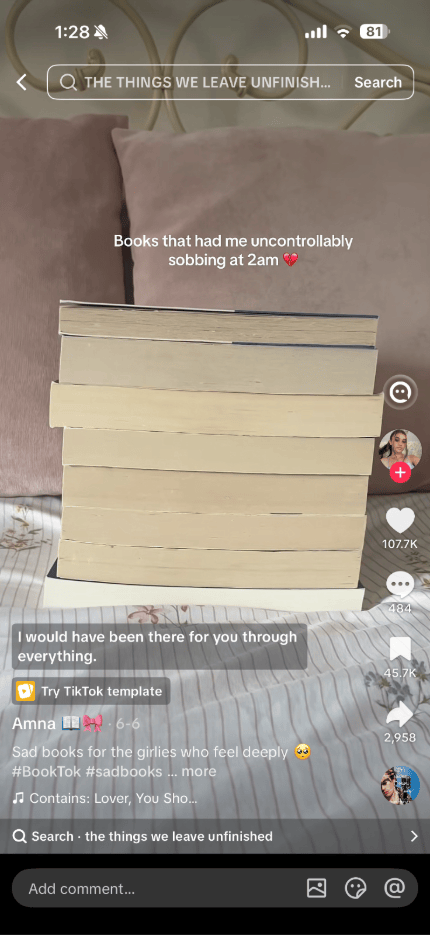
BookTok relies heavily on presentational design and emotional resonance to build connections across cultural and linguistic boundaries. Rather than relying on formal, text-heavy literary critique, BookTok creators utilize short-form video design—incorporating trending audio clips, rapid visual editing, and dramatic physical reactions—to communicate the emotional experience of reading. Because emotional expressions (such as crying over a plot twist or gasping at a cliffhanger) operate as non-discursive, presentational symbols, they bypass traditional language barriers. A reader in Tokyo and a reader in London can instantly understand the visceral impact of a book without sharing a common primary language.
Furthermore, the platform’s algorithmic design democratizes access and participation. Unlike traditional literary criticism, which historically maintained high barriers to entry through academic gatekeeping, BookTok allows anyone with a smartphone to publish commentary. This low-friction access has enabled readers from historically marginalized backgrounds to build global reading networks around diverse genres, such as romance, fantasy, and queer literature.
However, this participatory dynamic creates a complex rhetorical tension. I argue that while BookTok democratizes literary engagement and builds cross-cultural affinity networks, its reliance on algorithmic optimization ultimately commodifies emotional response, flattening complex literary critique into hyper-shareable aesthetic trends. When the platform’s design incentivizes high-arousal emotional performance over deliberate textual analysis, books are increasingly evaluated as aesthetic props rather than nuanced narrative artifacts. Publishers now design book covers specifically for TikTok aesthetic categories, demonstrating how platform architecture actively reshapes the production and reception of physical media.
As digital platforms continue to redefine how we read, gather, and communicate across global borders, we must look critically at how algorithmic spaces structure our literary imagination. How can global digital communities leverage platform design to broaden access and cross-cultural connections without allowing algorithmic commercialization to dictate what—and how—we read?


Leave a Reply